
Substance Use Services
DBHDS oversees federal and state funding for substance use services. We prepare members of our agency and partners to provide quality and quick care through grants, specialized training and education, and information and guidance.
State Opioid Response (SOR) Grant
DBHDS oversees the State Opioid Response (SOR) Discretionary Grant funds for treatment, prevention, and recovery.
SOR addresses the opioid overdose crisis by providing resources to increase the accessibility and effectiveness of FDA approved medications to treat opioid use disorder.
The Substance Abuse and Mental Health Services Administration (SAMHSA), Center for Substance Abuse Treatment (CSAT) administers the State Opioid Response (SOR) Grant. The purpose of this program is to advance the provision of trauma-informed, culturally relevant, and evidence-based substance use-related approaches and interventions across the country, and across the lifespan, to reduce instances of fatal overdoses and other impacts of opioid and stimulant misuse and use disorders.
State Opioid Response funds cover the full continuum of opioid use disorder: prevention, treatment, and recovery support services.
Learn more about Virginia SOR Grants
For more information, contact SORteam@dbhds.virginia.gov
Allowable services include (not all-inclusive):
1. Medication-Assisted Treatment (MAT), which includes buprenorphine, methadone, naltrexone, and other Food and Drug Administration (FDA) approved medications.
2. Evidence-based counseling and behavioral therapy
3. Assessments and diagnostic services
4. Distribution of life-saving opioid overdose reversal medications
5. Prevention activities such as outreach and education to decrease the transmission of infectious diseases and to prevent fatal overdoses
6. Peer recovery support via guidance from individuals with lived experience
7. Wrap-around services such as case management, transportation, childcare assistance, care coordination, etc.
Organizations receiving SOR funds include:
1. Community Services Boards
2. State and local health departments
3. Colleges and universities under the Collegiate Recovery Program
4. Federally Qualified Health Centers
5. Free Clinic
6. Faith-based organizations
7. State, local, and regional jails
8. Recovery courts
9. Other community-based organizations
Opioid Treatment
The State Opioid Treatment Authority (SOTA)
The SOTA oversees Opioid Treatment Programs in each state. Federal regulations (42 CRF, Part 8) outline the rules for how OTPs should operate, but some responsibilities can vary by state.
SOTA in Virginia
Kelly Murphy
1220 Bank St. Richmond, VA
Phone: (804) 625-1664
Email: kelly.murphy@dbhds.virginia.gov
Opioid Treatment Programs (OTP)
OTPs provide people with FDA approved medications for opioid use disorder (MOUD) and ensure patients can access other counseling and behavioral health therapies.
You can learn more about OTPs and counseling services from the Substance Abuse and Mental Health Services Administration. You can learn more about the federal regulations of OTPs from the Federal Register.
To provide services for OUD patients, OTPs must successfully complete the certification and accreditation process.
Mobile Methadone Units (MMUs)
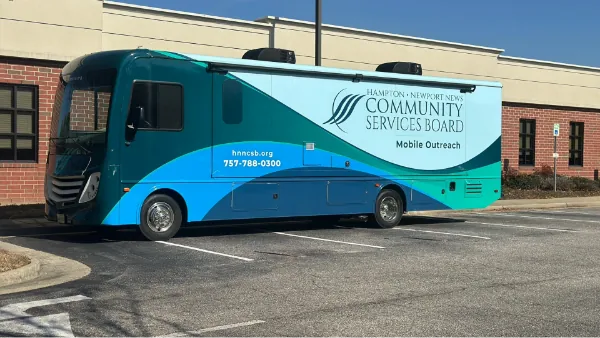
MMUs are mobile or non-mobile teams that are part of Opioid Treatment Programs (OTPs) and provide many of the same services. MMUs are also subject to the same regulations and must be recertified regularly.
The OTP program sponsor is eligible to apply for certification for an MMU with the Opioid Treatment Program Reporting System.
Licensing can also be acquired through DBHDS by clicking this link: licensing.
- Hampton-Newport News Community Service Board
300 Medical Drive, Hampton, Virginia 23666
The Mobile Medication Assisted Treatment Units (MMATU)
MOUDs provide services to people who experience systemic barriers to healthcare access. The services they provide can include:
- Medication Assisted Treatment (MAT)
- Psychical examinations and screenings
- Peer support, counseling, and harm reduction services
There are currently four MMATUs operated by CSBs. You can talk with the CSB staff to discuss how they set up their MMATU and develop your own.
- Eastern Shore Community Services Board (Location: 24233 Lankford Hwy, Tasley, VA 23441
- Piedmont Community Services (Location: 24 Clay Street, Martinsville, VA 24112)
- Valley Community Services Board (Location: 85 Sanger’s Lane, Staunton VA 24401)
- Chesapeake Integrated Behavioral Healthcare (Location: 224 Great Bridge Boulevard, Chesapeake, VA 23320)