

Marcus Alert
The Marcus Alert System enhances services for individuals in crisis due to mental health, substance use, or developmental disabilities. It coordinates between 911 and regional crisis call centers to provide a behavioral health response during emergencies. This system ensures that law enforcement receives specialized training for handling behavioral health situations.
Marcus Alert is named after Marcus-David Peters, a young man who lost his life during a mental health crisis in Richmond, Virginia, in 2018. For more information on the implementation of Marcus Alert and the impact and effectiveness of the comprehensive crisis system.
Marcus Alert Has Three Protocols
Protocol 1: Diverts low-level Marcus Alert calls from 911 to 988.
Protocol 2: Establishes a Memorandum of Understanding (MOU) that outlines the roles and responsibilities of Community Services Boards (CSBs), 988 call centers, 911 call centers, and law enforcement agencies. Law enforcement agencies serving areas with populations of 40,000 or more must commit to providing backup for mobile crisis response within their communities.
Protocol 3: Involves specialized law enforcement responses.
Program Availability
All Community Service Boards (CSBs) within the commonwealth are required to implement Marcus Alert by July 1, 2028.
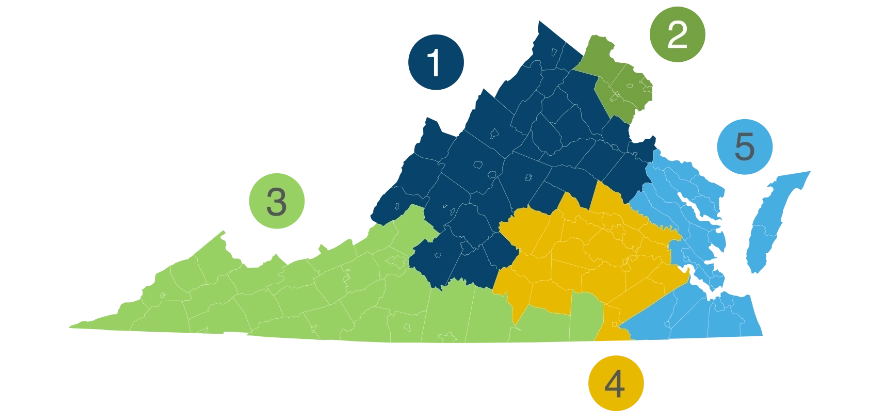
There Are Currently 17 Localities Operating Marcus Alert
Western VA
Encompass Community Services
Madison County, Fauquier County, Warrenton, and Culpeper City.
Rappahannock Area CSB
Caroline County, King George County, Spotsylvania County, City of Fredericksburg and Stafford County.
Horizon Behavioral Health
Amherst County, Appomattox County, Bedford County, Campbell County, and the City of Lynchburg.
Northern VA
Prince William County Community Services
Prince William County.
Fairfax-Falls Church CSB
Fairfax County, City of Falls Church and City of Fairfax.
Alexandria CSB
City of Alexandria.
Arlington CSB
Arlington County.
Loudoun County Dept. of Mental Health, Substance Abuse, and Developmental Services
Loudoun County.
Southwest VA
Highlands CSB
City of Bristol and Washington County including the Towns of Abingdon, Damascus, and Glade Spring.
Blue Ridge Behavioral Healthcare
Botetourt County, Craig County, Roanoke County, City of Roanoke, and City of Salem.
New River Valley CSB
Floyd County, Giles County, Montgomery County, Pulaski County, and City of Radford.
Central VA
Richmond Behavioral Health Authority
City of Richmond.
Chesterfield CSB
Chesterfield County.
Henrico Area Mental Health and Developmental Services
Henrico County, New Kent County, and Charles City County.
Southeast VA
Virginia Beach Human Services
City of Virginia Beach.
Hampton-Newport News CSB
City of Hampton and City of Newport News.
Western Tidewater CSB
Isle of Wight County, Southampton County, City of Franklin, and City of Suffolk.
Marcus Alert Toolkit
The Marcus Alert Toolkit provides resources to support localities with ongoing implementation of the Marcus Alert framework, as well as localities entering their designated planning year. These materials offer practical guidance to assist local partners with planning, coordination, implementation, and continued development of their local Marcus Alert systems.
The Marcus Alert Local Plan Planning Guide:
Trainings
911/988 Interoperability Training
The 911/988 Interoperability Training is now hosted on TRAIN Virginia and is designed to strengthen coordination, communication, and collaboration between 911 emergency communications professionals and 988 behavioral health crisis professionals. The training provides an overview of each system’s roles, responsibilities, and operational procedures to support effective crisis triage, appropriate response coordination, and seamless connections between emergency services and the behavioral health crisis continuum.
Training Eligibility
The training is intended for professionals working directly within the 911 and 988 systems. Participants must complete the Microsoft registration form and select the professional category that best represents their current role.
- 988 Behavioral Health Crisis Professionals: Individuals responsible for receiving, assessing, triaging, or coordinating responses to behavioral health crisis contacts through the 988 system. Eligible positions include 988 crisis workers, crisis counselors, crisis call center specialists, crisis contact center supervisors, and other personnel directly involved in 988 crisis contact center operations.
- 911 Emergency Communications Professionals: Individuals responsible for receiving, assessing, prioritizing, or dispatching emergency service requests through a 911 Public Safety Answering Point (PSAP). Eligible positions include 911 Public Safety Telecommunicators (PSTs), emergency communications officers, 911 call takers, emergency dispatchers, communications supervisors, and other personnel directly involved in PSAP emergency communications operations.
Registration and Training Access Instructions
To access the training, participants must first complete the Microsoft registration form, selecting the professional category that most closely aligns with their current responsibilities. Upon submission, an email will be sent to the email address provided in Question 2 of the registration form. This email will contain the TRAIN Virginia training plan number associated with the participant’s selected professional category.
Participants can then log into TRAIN Virginia, search for their assigned training plan using the provided training plan number, and begin completing the required modules. The confirmation email will also include instructions for creating a TRAIN Virginia account for participants who do not already have one.
Technical Assistance
For assistance with TRAIN Virginia account registration, training access, or other technical issues, please contact VA_admin@train.org
Meetings
The Statewide Marcus Alert Meeting convenes every six months in a Microsoft Teams meeting, and it is open to the public.
Past recorded meetings can be found on the Virginia DBHDS YouTube page.