

Projects for Assistance in Transition from Homelessness (PATH)
Projects for Assistance in Transition from Homelessness, known as PATH, is a federal, state and local partnership that provides outreach and assistance to adults with serious mental illness (SMI) who are experiencing homelessness or who are at risk of becoming homeless.
PATH services include community-based outreach, mental health, substance abuse, case management, and other supportive services, and a limited set of housing services. Depending on the resources of the local program, PATH may provide one-time financial assistance such as payment of one month’s rent to prevent eviction, assistance with first month’s rent, or a security deposit to assist an individual to obtain housing, or other related expenses.

Access Your Community’s Homeless Crisis Response System
PATH in Virginia
In Virginia, PATH services are provided by Community Services Boards in fourteen communities across the state. Names and contact information for the PATH staff are listed below.
- Alexandria Department of Community and Human Services: Contact Krysta Pearce at 703-746-5973.
- Arlington County Department of Human Services, Behavioral Health Services Division: Contact Michael Keen at 703-228-5331.
- Blue Ridge Behavioral Healthcare: Serving the Roanoke area. Contact Kathleen Talbott at 540-982-6990 x5180
- Fairfax-Falls Church Community Services Board: Contact Neva Ortuno at 703-533-5763.
- Hampton-Newport News Community Services Board: Contact Jenn Small at 757-788-0087
- Loudoun County Mental Health, Substance Abuse and Developmental Services: Contact Diane Daddio at 703-737-8702.
- Norfolk Community Services Board: Contact Cyndi Katz at 757-646-6363.
- Portsmouth Department of Behavioral Healthcare Services: Contact Kim Robertson at 757-393-8618, extension 8042.
- Prince William County Community Services: Contact Harry Hogshead, LCSW at 703-792-7799.
- Region Ten Community Services Board: Serving the Charlottesville area. Contact Harrell Patterson at 434-972-1800. Region Ten also partners with On Our Own of Charlottesville, an independent peer-owned and -operated program, to deliver PATH services.
- Rappahannock Area Community Services Board: Serving the Fredericksburg area. Contact Jason McIntosh at 540-479-4116, extension 17.
- Richmond Behavioral Health Authority: Contact Reggie Hill at 804-819-8756.
- Valley Community Services Board: Serving the Staunton and Waynesboro areas. Contact Amber Kappes at 540-487-1633.
- Virginia Beach Department of Human Services: Contact Kathleen Brooks-Johnson at 757-385-0672.
Access to your community’s homeless crisis response system can be attained via the primary contact number listed here.
Permanent Supportive Housing
Permanent Supportive Housing programs use existing partnerships to provide and coordinate community-based behavioral and primary health care services to individuals with SMI in stable rental housing of their own. PSH is provided through Virginia’s Community Services Boards (CSBs).
Eligible households include those meeting HUD’s standards for very low income (50% Area Median Income or below) that also meet one or more of the following criteria:
1) Patients in state psychiatric facilities,
2) Residents of supervised residential settings (e.g., ALFs, group homes) who want to live more independently,
3) Individuals chronically homeless (as defined by HUD) or literally homeless and at risk of becoming chronically homeless,* and/or
4) Individuals who are unstably housed and frequent users of hospital or criminal justice system interventions.
Permanent Supportive Housing (PSH) for Pregnant or Parenting Women (PPW) with Substance Use Disorders (SUDs)
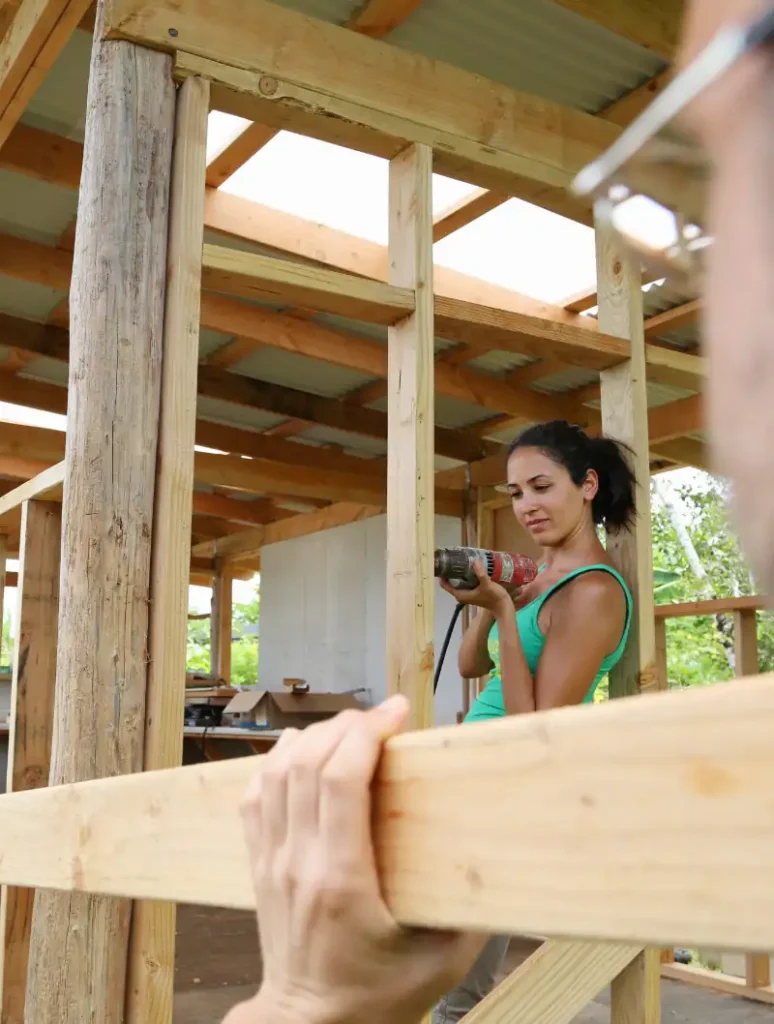
Permanent Supportive Housing for Pregnant and Parenting Women programs employ a combination of housing specialists, case managers and peer recovery specialists that assist PSH participants and their families in accessing housing and supportive services aimed at promoting housing retention, stability, and overall wellbeing.
Services are tailored to the family’s individual needs and self-identified goals and can include:
- identifying and applying for affordable housing options
- maintaining effective relationships with landlords and neighbors
- providing expertise in tenant-landlord and fair housing laws
- linking to mental health and substance use treatment
- coordinating prenatal, medical, and dental care
- education and skill development related to parenting and self-sufficiency
- support in navigating the criminal justice and child welfare systems
- and connecting children to well-baby care, childcare, W.I.C., developmental screening and intervention, and mental health services.
There is an emphasis on ensuring women and their children are able to access and engage in care by coordinating across the multiple systems that serve them.
There are currently six PSH PPW programs throughout the Commonwealth that are operated by Hampton-Newport News CSB (25 slots), Richmond Behavioral Health Authority (25 slots), Northwestern CSB (20 slots), Blue Ridge Behavioral Healthcare (25 slots), Henrico Mental Health (15 slots) and Mount Rogers CSB (20 slots).
Eligibility Criteria To participate in the PSH for PPW Program
Household composition must include a pregnant or parenting woman, including families working towards reunification, with at least one minor child. The eligible woman must meet current clinical criteria for a Substance Use Disorder (SUD) and present with additional risk factors such as child welfare involvement, homelessness or housing instability with high utilization of criminal justice, inpatient or residential treatment, domestic violence, and/or crisis or emergency services. Households must also meet HUD’s standard for very low income (50% Area Median Income or below).