
988 in Virginia
When you call 988, a trained crisis worker will be available to listen and support you. Help isn’t limited to just one phone call; 988 can also serve as the entry point to Virginia’s Crisis Services, which provides a continuum of care for Virginians experiencing mental health distress.
Learn more, find resources, and shareable materials about Virginia’s 988 Service.
What happens when you call 988?
First, you’ll be asked to choose from a few options, so we can get you the right kind of help.
A trained crisis worker will listen and work with you to get you the support you need.
If you want additional help, your crisis worker can assist with connection to local mental health professionals or community resources.
Crisis Services in Virginia
Mobile Crisis Response: Provides on-scene evaluation, treatment, and intervention for individuals in crisis.
Community-Based Stabilization: Offers support following an initial crisis through community services or referrals to a Crisis Stabilization Unit.
Crisis Stabilization Units: Function like hospital emergency departments specifically for mental health crises, typically involving short-term stays of under 24 hours.
Emergency Services: Code-mandated services that provide screening assessments for anyone experiencing a behavioral health crisis who meets the criteria for involuntary commitment.
REACH: The statewide crisis system of care for individuals with developmental disabilities

Mobile Crisis Response
Mobile Crisis Response (MCR) is a key part of the comprehensive crisis care system, with access 24 hours a day, seven days a week, year-round. Its purpose is to deliver rapid response, assessment, and early intervention for individuals facing a behavioral health crisis. Services are deployed in real time to the individual’s location.
Community Based Stabilization
Community Based Stabilization provides short-term assessment, crisis intervention, and care coordination for individuals facing a behavioral health crisis in a community-based setting—where they live, work, receive services, or socialize. Services may include brief therapeutic and skill-building interventions, engagement of natural supports, and strategies to integrate these supports to de-escalate and stabilize the crisis. Coordination of follow-up services is also part of the program. Additionally, Community Stabilization services require authorization from DMAS
The goal of Community Stabilization services is to help stabilize individuals within their communities and support them and their support systems during three key periods:
- Between an initial mobile crisis response and entry into established follow-up services at the appropriate level of care.
- As a transitional step-down from a higher level of care when the next service is identified but not immediately available.
- As a diversion to a higher level of care.
Licensed Crisis Sites
Crisis Receiving Center (CRC)
Also known as a 23-Hour Center, it provides ongoing assessment, crisis intervention, and clinical determination of the level of care for individuals experiencing a behavioral health crisis. Services are offered for up to 23 hours in a non-hospital, community-based crisis stabilization setting.
CRCs play a critical role in an effective crisis system by accepting referrals from crisis lines, mobile crisis teams, law enforcement, as well as walk-ins and self-referrals.
The goals of a Crisis Receiving Center (CRC) are to:
- Determine the immediate needs of the individual in crisis.
- Provide appropriate treatment throughout the 23 hours.
Coordinate care for ongoing psychosocial needs and support, including health literacy counseling, to facilitate the individual’s return to the community.
Crisis Stabilization Unit (CSU)
Residential Crisis Stabilization services are available 24/7 to provide short-term assessment, crisis intervention, and care coordination for individuals experiencing a behavioral health crisis.
These services include advocacy and networking to connect individuals and their support systems with appropriate community-based services and resources, helping them access any benefits or assistance programs for which they may be eligible..
Crisis Therapeutic Homes (CTH)
The Crisis Therapeutic Home (CTH) is a residential crisis stabilization component of the REACH program. It is intended for situations where community-based crisis services are ineffective or clinically inappropriate. The CTH is not meant for long-term residence or respite; instead, it provides stabilization for individuals in crisis, planned prevention, or as a step-down from state hospitals, training centers, or jails. Priority is given to crisis admissions over planned prevention or step-down admissions.
Non-Licensed Crisis Sites
Crisis Intervention Team Assessment Center (CITAC)
A CITAC is a designated facility where law enforcement officers can transport individuals, who are in behavioral health crisis, and are voluntarily seeking behavioral health support, or are under an Emergency Custody Order (ECO), to a safe and caring environment, for a comprehensive evaluation by a mental health professional.
This model offers a therapeutic alternative to emergency rooms or jails, focusing on de-escalation and appropriate care. CITACs offer 24/7 support through partnerships between local behavioral health agencies, law enforcement, and healthcare providers.
For more information regarding next steps and other emergency services, visit the emergency services page.

REACH Program
Crisis Supports for Youth or an Adult with a Developmental Disability
REACH stands for Regional Education Assessment Crisis Services Habilitation. It is part of the Virginia Crisis Continuum of Care, designed to support individuals diagnosed with a developmental disability (DD) living in Virginia.
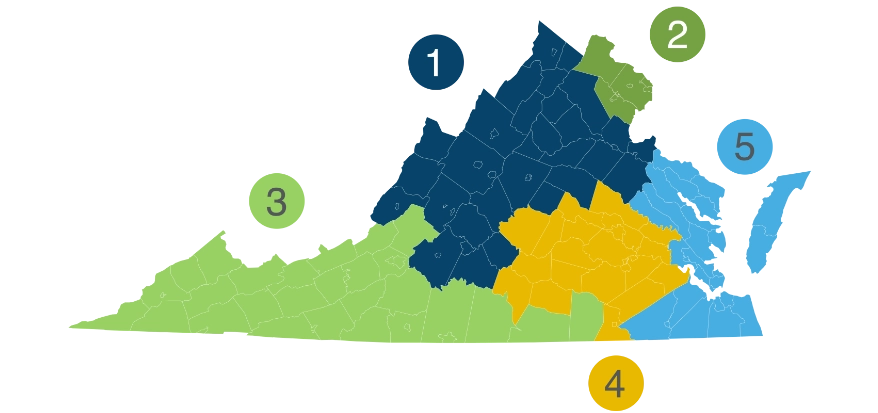
The REACH program offers 24/7 mobile crisis response and short-term crisis stabilization services, including both residential (crisis therapeutic home) and non-residential options (services provided in community locations where individuals live, work, or socialize). It also provides prevention support for those experiencing a behavioral health or behavior-related crisis. REACH services are available in each of the Commonwealth’s five regions: Region I (Western), Region II (Northern), Region III (Southwestern), Region 4 (Central), Region 5 (Eastern).
REACH Program Eligibility Requirements
Assessment for REACH program eligibility is conducted at the regional level. No qualifying individual will be turned away due to an inability to pay for services.
The REACH program does not serve individuals who are actively under the influence or detoxing from substances, including alcohol. REACH personnel do not pre-screen individuals for inpatient admission. Anyone who meets the eligibility criteria can access REACH services at no cost.
Program Contact Information
REACH Documents
What is REACH?
REACH is a statewide program designed to support individuals with a developmental disability (DD) who are experiencing a crisis.
REACH FAQs
How do we make a Non-Crisis Referral?
Non-Crisis Referrals can be made by calling a REACH Crisis Line Number.
When is the right time to call REACH?
It is best to call when the person is beginning to escalate rather than when in full crisis and before leaving the home. REACH staff prefer to see the person in their home or community environment rather than meeting the person at the emergency room or emergency services office.
How quickly do staff respond to a crisis on-site?
Staff’s goal is to be on site within an hour of dispatch, but depending on traffic, weather, and distance it may take longer to arrive on site of crisis.
Does the youth Crisis Therapeutic Home provide school services?
No, the family of the youth is responsible to notify the school system of the youth’s absence from school. The program does arrange time for completion of any schoolwork sent.
Can a person be admitted to a Crisis Therapeutic Home (CTH) who does not have a developmental disability diagnosis?
Any person admitted to a CTH must have a verified developmental disability diagnosis.
What is a verified developmental disability diagnosis?
A diagnosis given by a qualified professional after assessment/testing and as per clinical practice standards. Typically, this may occur as part of the IEP school process or during an evaluation by a psychologist or other licensed professionals.
Does the CTH provide Detox services?
No, a person cannot be admitted to a crisis therapeutic home who is actively using or needs Detox services.
Can the CTH accept a person under a Temporary Detention Order (TDO).
No.
Can a person be court ordered into a CTH?
No, all admissions are considered a voluntary admission.
Can a person be turned down if unable to pay?
No, however the operators of the REACH program will bill for the service, as allowed, if the person is covered by a private insurance, waiver, or state plan option. REACH staff will also work with the CSB to open a person to waiver, where applicable.
Are REACH Staff Licensed?
REACH services are provided according to state regulations and employ licensed, certified, and specially trained staff (direct service professional, peer support staff).
Is having a diagnosis of dementia or Alzheimer’s Disease an automatic denial for someone seeking admission to a CTH?
No, however depending on the clinical and medical needs of the person a short-term crisis service may not be appropriate or contrary to the clinical stability of the individual.
Does REACH accept a person with an Intellectual Disability Diagnosis?
Yes, the diagnosis of an intellectual disability falls under the broader heading of Developmental Disability.
Reach Services
Mobile Crisis Response
24/7 crisis assessments and interventions address and resolve crisis situations for individuals with a developmental disability (DD) experiencing behavioral and/or psychiatric crises.
Community-Based Crisis Stabilization Services
Community Stabilization services help individuals stabilize within their community. These services are available 24/7 and provide short-term assessment, crisis intervention, and care coordination for those experiencing a behavioral health crisis.
Services may include:
- Coordination of follow-up services.
- Brief therapeutic and skill-building interventions
- Engagement of natural supports
- Strategies to integrate these supports into crisis de-escalation and stabilization
Crisis Therapeutic Homes
The Crisis Therapeutic Home (CTH) is a residential crisis stabilization component of the REACH program. It’s designed for situations where community-based crisis services are ineffective or clinically inappropriate.
The CTH is not intended for long-term residence or respite, it provides stabilization for individuals in crisis, planned prevention, or as a step-down from state hospitals, training centers, or jails. Priority is given to crisis admissions over planned prevention or step-down admissions.
Crisis Education and Prevention Plan (CEPP)
A plan provides a clear and realistic set of supportive interventions to prevent or de-escalate a crisis for individuals experiencing a behavioral loss of control. Customized training is offered for both the individual and their support network, focusing on specific strategies to help manage early signs of distress and prevent crises. This approach greatly reduces the chances of needing to relocate the individual for care.
Training and Education
REACH provides training and education to the broader community that covers REACH services and topics relevant to the populations served. These populations include:
- Community Services Boards (CSBs)
- Families
- Providers
- Law enforcement
- Hospitals